Regardless of your reasons, composting is a win/win scenario. Good for you and good for the environment!
Save Your Garden!
Adding compost to your garden will not only fertilize, it actually feeds your soil with a diversity of nutrients and microorganisms that will improve plant growth. Chemical fertilizers only provide a quick burst of a limited number of nutrients that can wash away into our rivers and streams. Compost also increases soil stability, improves drainage and helps retain moisture.
Save Money!
No need to buy chemical fertilizers, compost is all you need! It helps to retain soil moisture so you water less frequently. The nutrients from compost don’t get washed away by rainfall, so there’s never any pollution or waste!
Save Resources!
Remember, up to 50% of residential waste is compostable materials. By composting, you help to keep a valuable resource (organics/food waste) out of the landfill. This ultimately puts less pressure on landfills while extending their life. Composting can also reduce civic costs for waste collection as well as overall fuel use.
Improve Your Soil!
Composting returns valuable nutrients to the Earth and helps maintain soil quality and fertility. Compost is a mild, slow release, natural fertilizer that won’t burn plants like chemical fertilizers. It improves texture and air circulation for heavier soils (like Manitoba gumbo) while increasing the water retention of sandy soils. Providing organic matter and nutrients will improve plant growth and lead to greater yields.
Reduce Your Impact!
Through composting, you can reduce greenhouse gas emissions in two ways. First, you can reduce CO₂ emissions from diesel vehicles used to transport large amounts of waste to landfills. Second, you can reduce methane emissions by allowing organic material to break down aerobically (with oxygen) in a compost bin. In landfills, organics break down anaerobically (without oxygen) and produce methane gas, a greenhouse gas 25x more powerful than CO₂.
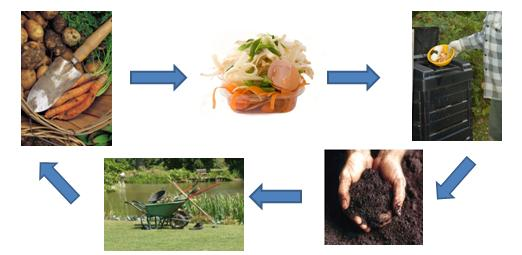
By composting, you help to reduce the impact of chemical fertilizers that runoff into our rivers, lakes and streams. Decomposing organics in landfills can react with metals to produce toxic leachate, a potential source of groundwater pollution which can be avoided through composting! Composting also completes the cycle of returning what you grow back to the soil to help you grow!
What You Need
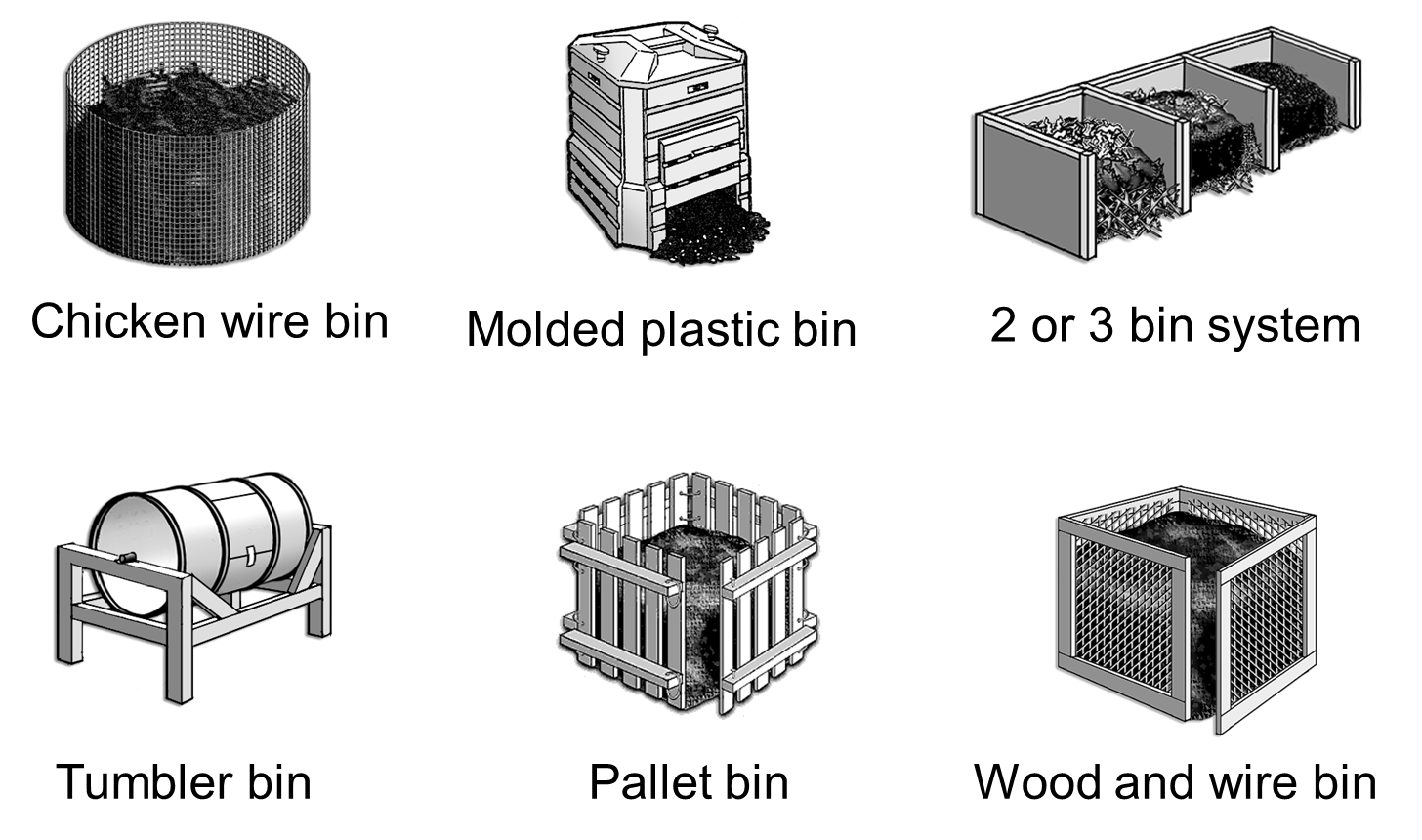
You don’t really need a bin to start composting. You can simply create a compost heap in your backyard! However, most people prefer to keep their composting materials confined and covered. You will also need to think about how much waste you generate and how much space you have available for composting. If you are composting outdoors, the ideal location for your bin is on grass or soil and in a sunny (or partly sunny) spot. Choose a location that is convenient to access all year-round. There are lots of options for bins ranging from commercially available molded plastic bins to large multi-bin systems that you can build yourself:
If you live in an apartment or don’t have a backyard, you should check vermicomposting indoors using Red Wriggler worms.
What Can I Put in My Compost Bin?
There are two main types of organics that can be put into your compost bin: “greens” and “browns”. Greens are wet materials rich in nitrogen while browns are generally dry and rich in carbon. You need both of these materials to make compost.
Greens
Vegetable and fruit scraps (fresh, cooked, or canned), coffee grounds/filters, tea leaves/bags, garden waste, fresh weeds without seeds, fresh grass clippings
Browns
Dried leaves, straw, hay, sawdust, woodchips, twigs, dried grass, shredded newspaper
Avoid
Meat, fish, eggs, dairy products, oily foods, bones, pet waste, weeds with mature seeds, plants infected with disease, plastic, metals, synthetic materials. Meat, fish, eggs, bones, etc. can be composted using a food waste digester such as the Green Cone, but should never be placed in your backyard compost bin.
Starting Your Bin
Start your pile with a generous layer of browns on the bottom. Alternate the layers of greens and browns (there should be 2 to 3 times more browns than greens). You should always cover the greens with a generous layer of browns to prevent odours and avoid attracting unwanted pests. Browns you can use include leaves, sawdust, straw, or even shredded newspaper. To make sure you always have some browns available, store some leaves in the fall to use all year round. You won’t really need them to compost in the winter, as the greens you add will be frozen anyway, but come spring they are valuable! You can also add soil at any stage of the layering process. A shovel-full of soil will introduce many soil organisms into your pile and acts as an accelerator. A thin layer of soil added on the top of your pile also helps to discourage pests and odours. For more information on keeping out unwanted visitors, check out our pest proofing blog! Lastly, the smaller the material, the faster it will break down. Woody debris and larger materials take a longer time to compost.
Moisture Levels
Water and air affect the efficiency of the composting process. However, if you are not concerned about how quickly your compost is ready for use, then there is little else you need to do. Just feed your pile the right foods in the right proportions. Your compost pile is full of living micro-organisms and if they are in a healthy environment, their population and activity will increase, which in turn increases the heat in your compost pile. The hotter your pile, the faster you get finished compost! The microorganisms in your compost pile need moisture in order to survive. However, if there’s too much moisture, they won’t be able to breathe. Your compost pile should have a moisture content of approximately 50%. You can easily check the moisture content by simply taking a handful of the compost and squeezing it in your hand. It should leave your hand moist and not drip more than a few drops when squeezed tightly. Even though “greens” add moisture content, you may still have to add water. If your compost pile does not have a lid, you may want to consider covering it during heavy rains if it already has sufficient moisture.
Air/Oxygen
The micro-organisms in your compost pile also need air. Aerating your compost is not a necessity, but it helps to speed up the decomposition process. If you do not aerate your pile, it could cause the pile to begin to compost anaerobically, producing an unpleasant odour. If you want your compost quickly, you can stir your pile as often as every 3 to 5 days. You can aerate your pile by using a pitchfork, shovel, or aerating tool to poke holes and make air channels throughout the pile. If you have a large compost pile, be sure to aerate all the way to the centre so that the whole pile gets the air it requires.
How Do I Know When It’s Finished?
The composting process can take anywhere from a few months to a few years to complete. The length of time depends on balancing the right mix of materials, moisture content, and air. There are many different compost bins, and the specific type you have will have an effect on exactly how you harvest your finished compost. Generally, the compost is ready to use when it is dark brown, smells like earth, and crumbles in your hand. For more information on harvesting and using your compost, check out our on harvesting compost page.
Questions?
- Call us at (204) 925-3777 Ext.110 or email us at compost@greenactioncentre.ca
- Check out our composting presentations
- Check out our compost troubleshooting page
- Backyard Composting Booklet (English)
- Backyard Composting Booklet (French)
More Resources
More Blog Posts
More Events
Other Presentations/Workshops
.png)
The ‘Getting Rid of’ Guide: An Eco-Friendly Version
Have a unique household item you want to dispose of? We’ll help you find the right place to take it.
The ‘Getting Rid of’ Guide: An Eco-Friendly Version
Have a unique household item you want to dispose of? We’ll help you find the right place to take it.