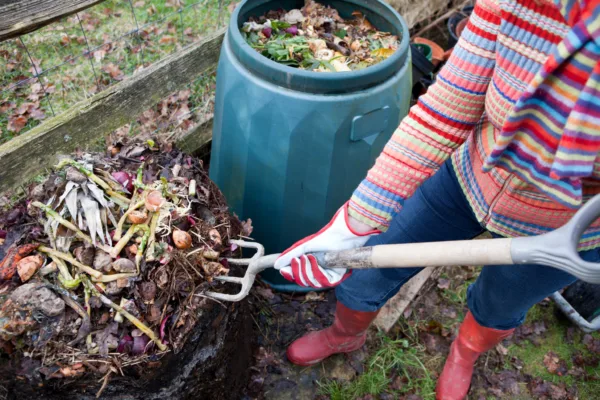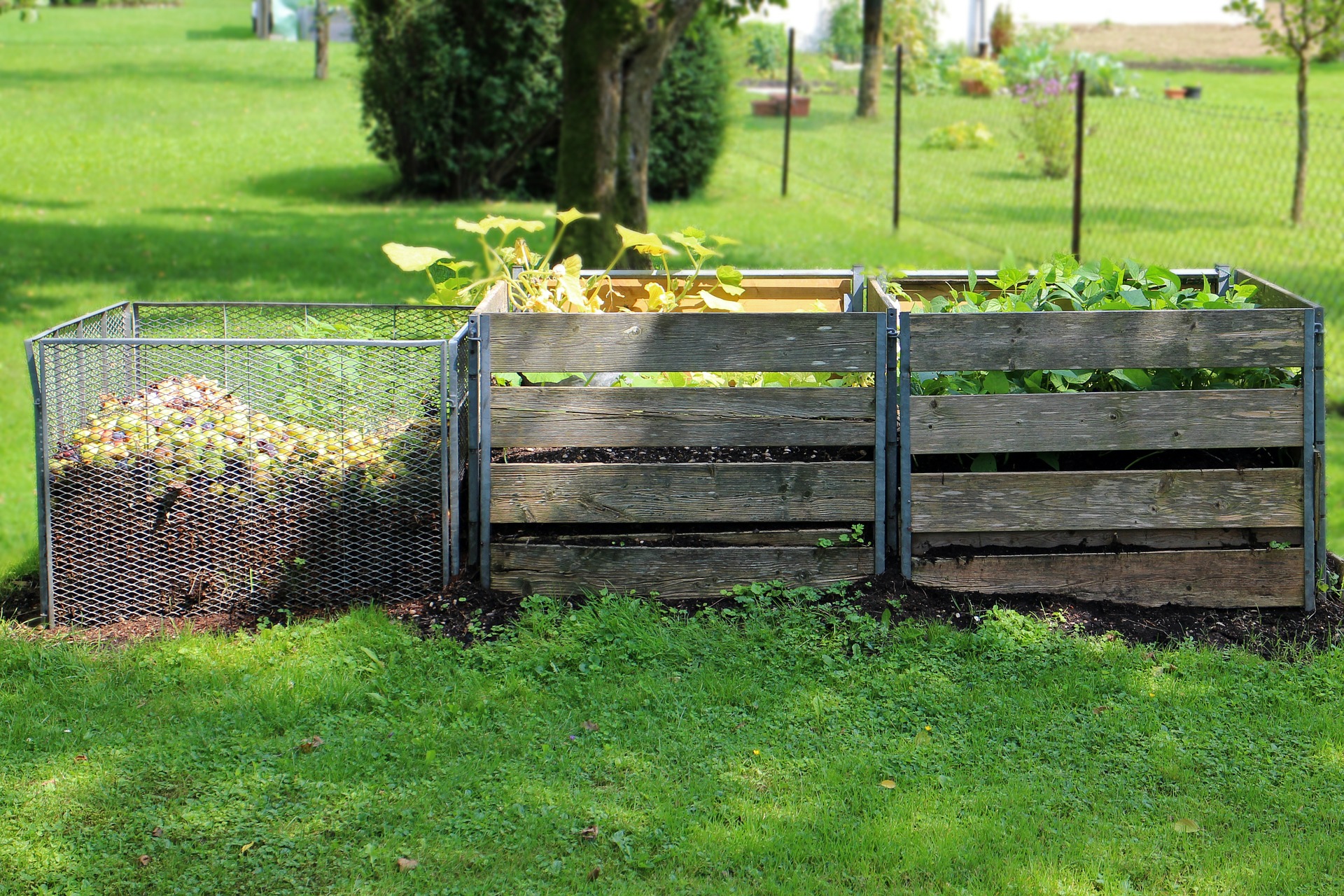

Feeding your compost the right food and in the right proportions will help you avoid composting problems. Here are some potential issues that people are either concerned about or have experienced.
Why does my compost pile smell?
If your compost smells sour like ammonia, the most common reason is too much green material and/or a lack of brown material. You should use 2 to 3 times as much browns as greens. Always cover your greens with a layer of browns like leaves. Check out our Composting Basics and Getting Started page for more details on how to balance your greens and browns. If you have been composting without browns for a while, you may also need to incorporate the browns into your entire bin by turning your pile as you incorporate layers of browns. When you have finished turning the pile be sure to top it off with another layer of browns.
If the compost smells like sulphur or rotten eggs, then there is a lack of oxygen causing the pile to decompose anaerobically (without oxygen). This can be due to either excess moisture or your pile being too compacted. Simply turn the pile, adding browns as necessary to absorb any excess moisture.
Nothing seems to be happening. Why?
Once again, this can be a problem with balancing how you feed your pile or an issue with moisture and air. If you have been feeding your pile with a balance of greens and browns, your pile may be too dry. Check to see if there is sufficient moisture by taking a handful of the compost and squeezing it in your hand. If it stays together in a ball (not more than a few drops should come out) it is at the correct moisture content. If not, you should add water to the pile. It would also be a good idea to turn the pile to introduce some oxygen. Make sure not to turn your pile too often; once every few weeks in warm weather should be enough. Turning your pile too frequently will interrupt the heating up of the pile and can slow the decomposition.
Why are there so many insects in my bin?
Insects should be in your bin! They are an important part of the composting process, but a large amount of flies or wasps could indicate a problem. Flies are attracted to odours, and can be controlled by ensuring you always have a layer of brown material on top of your pile. Wasps and ants may also be attracted to odours, however they will also tend to nest in a dry pile. Turn your pile regularly and ensure that it is moist. If it is too dry, simply add water. Want to know more about how to deal with wasps in your compost pile? Click here!
What about rodents and other pests?
Raccoons and other animals are also attracted to odours, especially if those odours are meats, fish, or dairy products. Keep these materials out of your compost bin. Always cover your fresh food waste with a generous layer of browns. If you are using a plastic bin, keep the lid on to keep animals out.
Can I compost meat, fish, dairy, etc?
These items should not be added to your compost bin, but can be added to a digester like the Green Cone. A digester is a special type of bin that breaks these items down, but does not create compost. These systems only require green material and are therefore usually recommended in conjunction with another composting system to compost excess yard waste.
How do I compost pet waste?
Pet waste should never be added to your compost bin, but you can build or purchase a digester to break down pet waste in a safe and effective manner. Pet stores may also sell pet waste digesters or you can also buy a system like the Green Cone mentioned above to handle more than just pet waste.
Can I compost weeds or diseased plants?
Most weeds will break down in the compost bin. If you are adding large amounts of weed seeds or diseased plant material, use a compost thermometer to ensure that the pile reaches 55 Celcius for 3 consecutive days to destroy all seeds or pathogens. If your compost bin is not heating up enough, you can use a compost bin made from an old garbage can and leave it in the hot sun. This will heat up enough to ensure that the seeds are no longer a problem.
Can I compost rhubarb leaves?
Leaves from plants like Rhubarb, Foxglove, and Lupins can be safely composted. While the leaves are poisonous, the toxic oxalic acid in them is mostly broken down by the heat of the pile. The small amount of acid remaining will not inhibit the microbial action or make the compost unusable. The bottom line is that since we don’t eat compost, it is not a problem. Even compost piles containing large quantities of toxic leaves still decompose nicely and the compost in no way inhibits plant growth.
Still Have Questions?
- Give us a call: (204) 925-3777 Ext.110
- Send an email to compost@greenactioncentre.ca
More Resources
More Blog Posts
More Events
Other Presentations/Workshops