
If you haven’t started composting yet, click here to get started! Spring is a great time to start composting, and if you’re lucky, you may even have some finished compost by fall! For those of you who have compost bins that are starting to thaw out, here’s a few spring maintenance tips to get you ready for gardening season!
Thank the Cold
The best part of having your compost sit outside through our frigid Manitoba winters is that your compost freezes! Yes, that’s actually helpful, even though almost no active decomposition was happening while it was -20 outside. Organic materials that freeze become much softer once they melt, due to the water in the cells expanding and bursting the cell walls. This means that anything that’s been frozen will decompose faster after it thaws! Thanks, Jack Frost, for doing some of the hard work for us!
Consider Harvesting
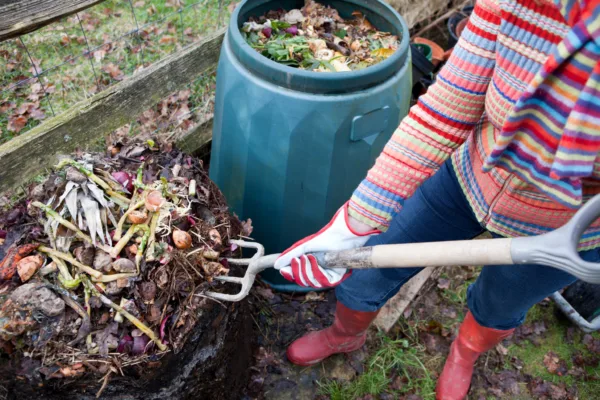
If you didn’t get around to it in the fall, and your bins are full, take a look inside to see if you have enough finished compost to harvest it. Starting off with a relatively empty bin means you’ll have more room to add through the summer! Finished compost will generally be at the bottom of a bin or heap, so you’ll have to move around any unfinished material on top and then replace it once you’re done harvesting. If you have a raised tumbler-style bin, avoid harvesting finished compost from it until the entire bin contains finished compost (this is one reason why you’ll want to have two bins if you choose this style). Once you harvest your compost, you’ll want to use it! If you’re applying it to an area that will have seeds or new seedlings, try to apply the compost to the soil as far before planting as possible, to be sure the compost is completely mature. Otherwise, it’s great to spread on your lawn, or at the base of mature trees and shrubs!
Don’t Forget Your Browns
If you kept adding to your compost bin through the winter, and chose not to layer with leaves in order to save space, that’s awesome! However, that means your nutrient balance will be off, and you need to add enough browns to balance it back out. Hopefully you still have a nice pile of dried leaves stored up from last fall. Ran out of leaves? Other good sources of “browns” include clean sawdust or fine wood shavings; shredded office paper or newsprint (nothing glossy, please!) and paper towels, in a pinch (they’re a bit awkward to deal with but do break down ok). The rule of thumb is for every 1 pound of ‘greens’ (kitchen scraps and high nitrogen items), add 1 pound of ‘browns’ (carbon-rich materials).
Check Moisture
First thing in spring, many compost piles will be quite wet. That’s natural, but note that if it stays really wet, you may struggle with smell problems.
Let Nature Do the Rest!
Remember, decomposing is a natural process that will happen whether you want it to or not – hence why many of us have soggy lettuce at the back of our fridges. All of our compost tips are aimed at helping you get a better product with fewer issues, but no matter what you do, you can’t help but make compost eventually! Once you’ve balanced out your bin’s greens with some browns and given it a stir, sit back and relax and let nature do the rest. Happy composting!
More Resources
More Blog Posts
More Events
Other Presentations/Workshops


.png)
The ‘Getting Rid of’ Guide: An Eco-Friendly Version
Have a unique household item you want to dispose of? We’ll help you find the right place to take it.
The ‘Getting Rid of’ Guide: An Eco-Friendly Version
Have a unique household item you want to dispose of? We’ll help you find the right place to take it.