.png)

.png)
.png)
.png)


Vehicle Trips are Plateauing or falling
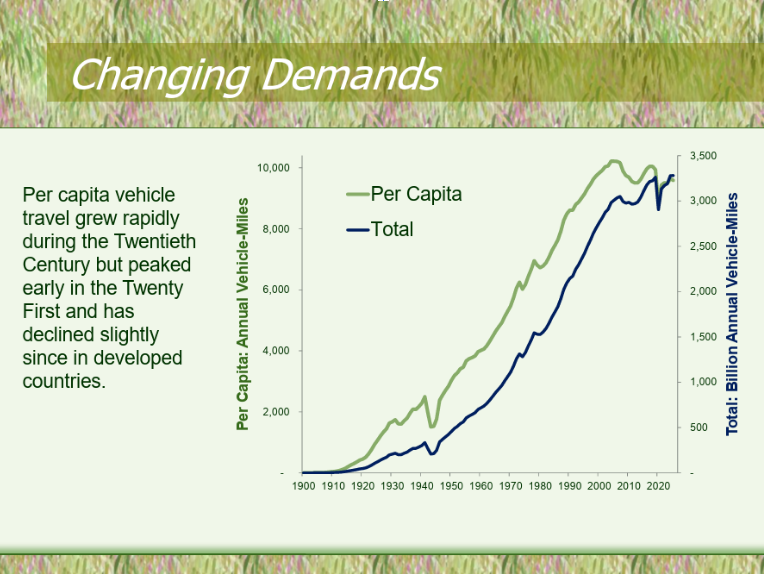
Todd noted that per capita vehicle travel grew rapidly during the 20th century, but peaked early in the 21st, and has been falling steadily since. Cities will see a rising demand for non-auto travel options and Winnipeg would be wise to ensure these travel options are safe, convenient and comfortable to attract and retain populations, as well as large employers who want to invest in cities that offer travel choice to employees.
The Mobility Productivity Paradox
A second important factor from Todd’s research is the decoupling of mobility and productivity. In the 20th century, building roads to link places together caused a rapid increase in GDP. We see in the graph above, however, that this link no longer exists. While we still have city reports that claim that an increase in road capacity will lead to more productivity, it is imperative for federal, municipal and provincial governments to question these claims, as they are often based on information that is out-of-date.
On the other hand, investment in transit is seeing a continuing growth increase in GDP. Cities like Winnipeg have an incredible opportunity to increase our productivity by investing in our transit system.
Accessibility and Affordability
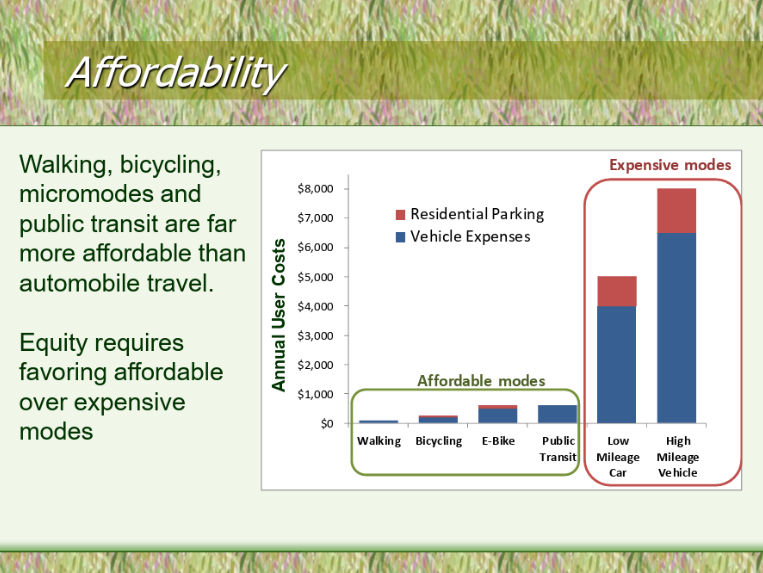
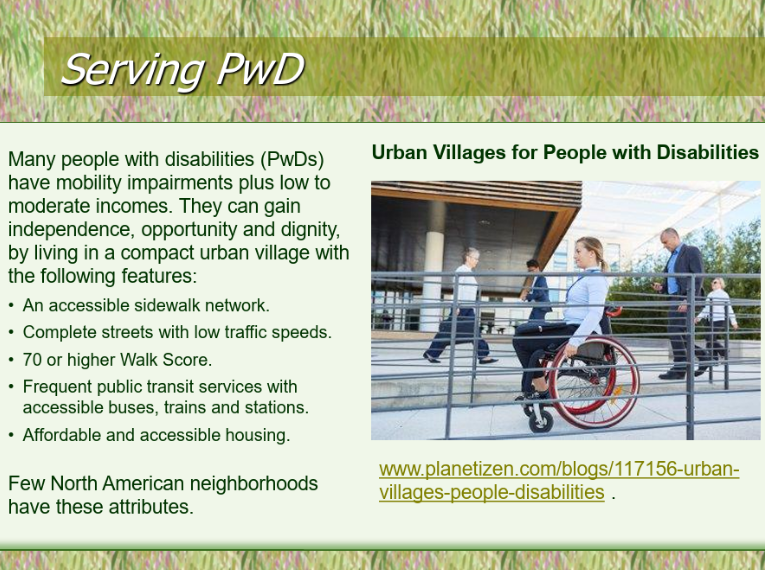
Todd spoke about transportation accessibility and affordability, which are important for cities like Winnipeg to consider. Whether we are talking about children traveling to school, seniors maintaining strong social connections, people with disabilities accessing community services or teenagers reaching their first jobs, it is vital to ensure non-vehicle options are convenient and comfortable.
Congestion
Todd spoke about congestion and how cities like Winnipeg can reduce congestion in the long term. Currently, Winnipeg has relatively little congestion and it only occurs at peak times.
Instead of spending on increasing road capacity, “improving space-efficient modes and providing TDM incentives to use them is the most effective and beneficial way to reduce congestion and improve freight transport.”
Strategies to reduce congestion in the long term include carrots and sticks. For example, having a transit system that is convenient and comfortable, while also expanding paid parking beyond the downtown.
You can view Todd Litman’s presentation at the video link above. His slideshow presentations are available here or by emailing gohappy@greenactioncentre.ca.
Funders and Sponsors
Thank you to our funders and sponsors who made Changing Lanes possible:
- Province of Manitoba
- Councillor Emma Durand-Wood
- Landmark Planning & Design Inc.
- Peg City Car Co-Op
- Councillor Bryan Mayes
- The Forks
Green Action Centre offers keynote speaker events every 2-3 years. Our past presentations include:
- Equitable Cities
- Transportation for a Strong Town
- Parking and the City
- From A to B: Workplace Wellness and our Environment