White Goods Pilot Project

.jpg)
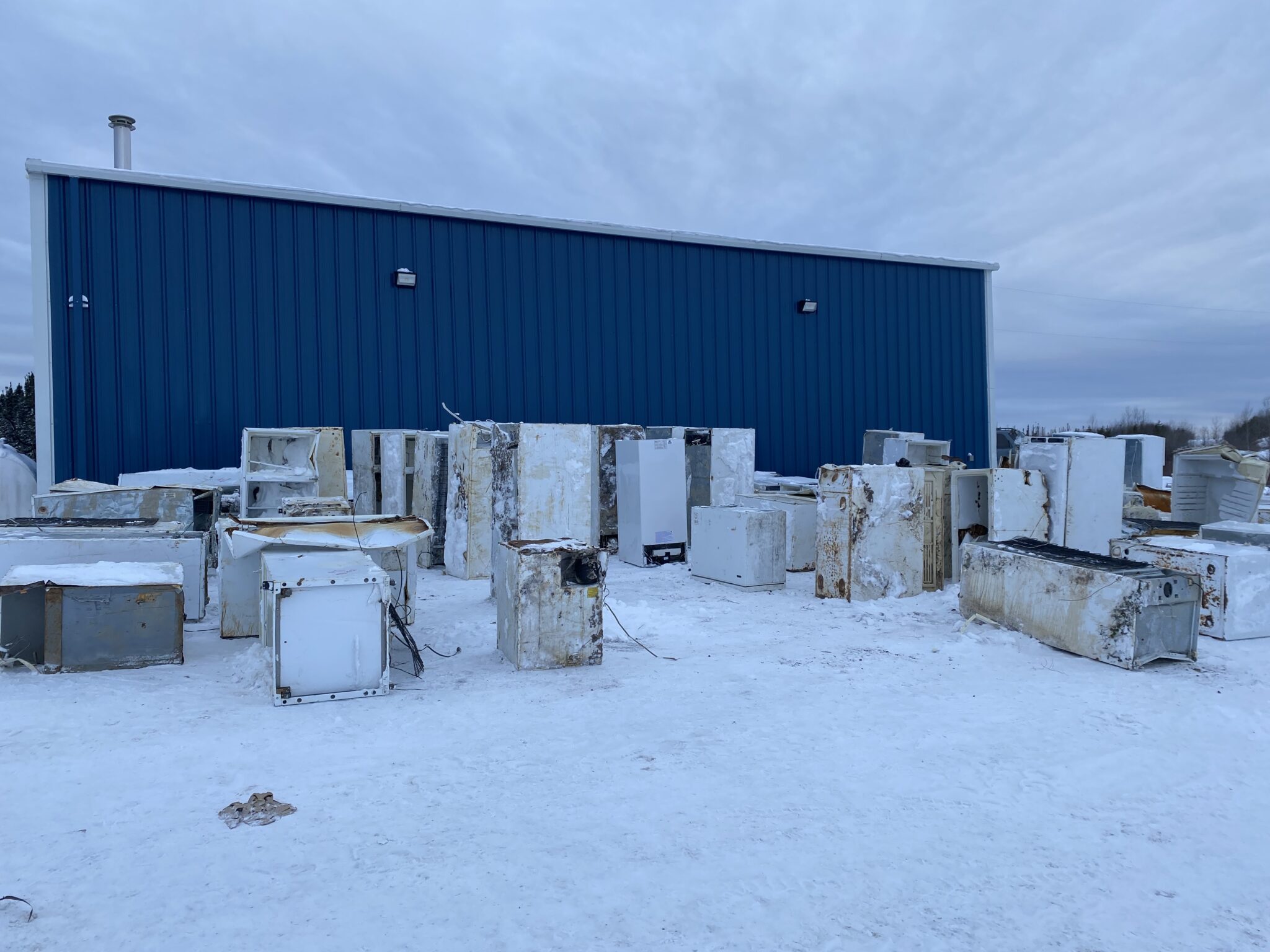
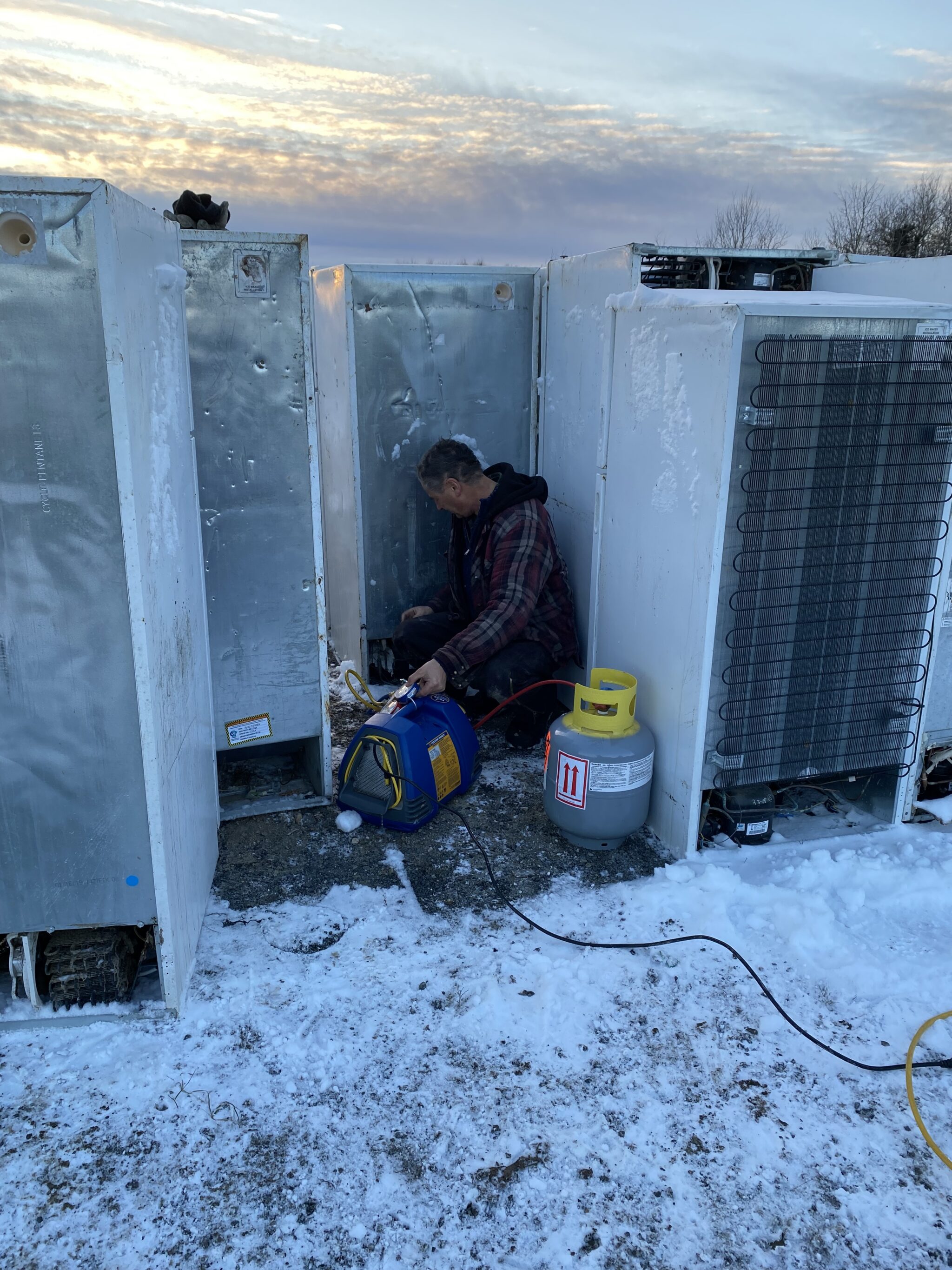
In late 2023, The FNWM team started a pilot project which aims to safely remove legacy white goods (fridges/freezers) from First Nation communities. We hope to protect the community environment by safely capturing remaining refrigerant gas found in white goods before it can leak out into the atmosphere, damaging the ozone layer. By removing the refrigerant gas, we can re-classify the white goods to non-hazardous waste. This helps navigate around transport regulations that had previously kept them stockpiling in communities for decades. To add to the challenge, white goods have no stewardship group. This means that each First Nation community has to pay out of pocket to have them removed.
In November, Pathfinders (alongside a MOPIA technician) traveled out to Bunibonibee Cree Nation to support their waste management team with the de-pollution of white goods. Over a three day period, 118 units were de-polluted and prepared to be shipped as part of this year’s Backhaul. Approximately 4 lbs of refrigerant gas were removed from these units. The first Backhaul load of this winter road season arrived in Winnipeg just last week from BCN, carrying a full load of depolluted white goods.
In late January, the FNWM team flew out to St. Theresa Point First Nation and Wasagamack First Nation to spend the week de-polluting white goods. Our team, working alongside St. Theresa Point and Wasagamack waste management crews were able to dig a total of 223 units out from the snow. We placed them in the loader bucket to be sent to the staging area to be de-polluted by the MOPIA technician, who once again accompanied us for this project. Approximately 25 lbs of refrigerant gas was collected from the white goods in both communities.
FNWM hopes to visit Lac Brochet (the 4th community participating in this pilot project) in Spring to provide de-pollution services to their legacy fridges and freezers as well. While the current winter road season will likely be over by then, the units can be shipped as part of next year’s Backhaul.
Big thanks going out to St. Theresa Point, Wasagamack and Bunibonibee landfill crews for their hospitality, and helping us with our mission. We couldn’t have done it without their expertise and machine-operating abilities!
More Resources
More Blog Posts
More Events
Other Presentations/Workshops
Indigenous Zero Waste Technical Advisory Group (BC)
The Indigenous Zero Waste Technical Advisory Group (IZWTAG) offers training and resources to First Nations to implement zero waste systems within their communities.
Indigenous Zero Waste Technical Advisory Group (BC)
The Indigenous Zero Waste Technical Advisory Group (IZWTAG) offers training and resources to First Nations to implement zero waste systems within their communities.
FNWM: Composting
There is no registration required with an industry stewardship organization for composting. However, there are multiple good resources available to help you and your community choose the right method for composting.
FNWM: Composting
There is no registration required with an industry stewardship organization for composting. However, there are multiple good resources available to help you and your community choose the right method for composting.
Living Sustainably - Part 1
Intended for First Nation schools, this presentation provides a basic understanding for high school students about Traditional Ecological Knowledge, its role in protecting the environment, and how that knowledge is connected to Indigenous worldviews. This includes an overview of current waste practices in various First Nation communities around Manitoba and examples of how communities are making changes to live more sustainable ways of life to ensure there's a healthy planet for the next seven generations. Students will learn actions they can take to respect the environment.
Living Sustainably - Part 1
Intended for First Nation schools, this presentation provides a basic understanding for high school students about Traditional Ecological Knowledge, its role in protecting the environment, and how that knowledge is connected to Indigenous worldviews. This includes an overview of current waste practices in various First Nation communities around Manitoba and examples of how communities are making changes to live more sustainable ways of life to ensure there's a healthy planet for the next seven generations. Students will learn actions they can take to respect the environment.