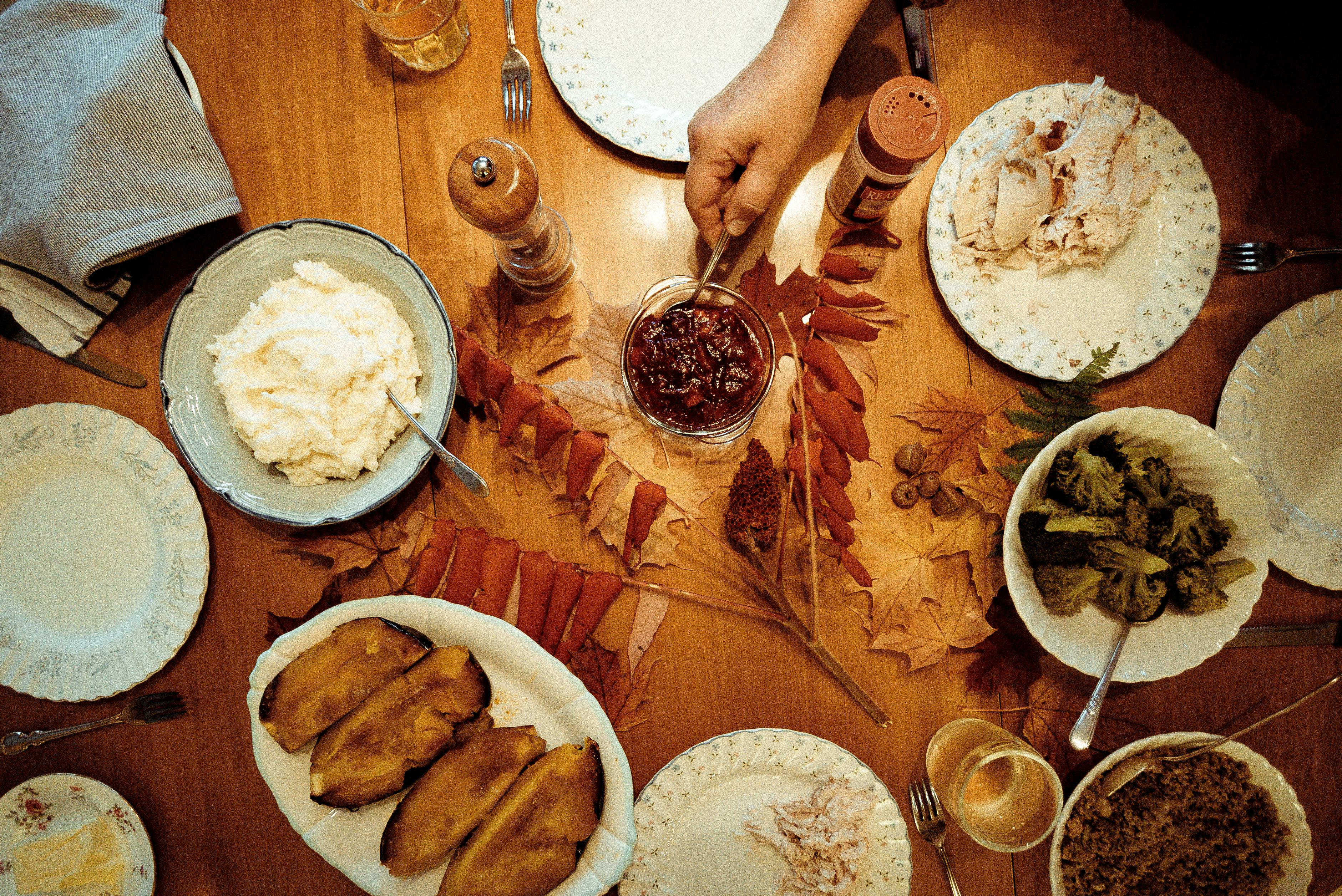

Ahhhh, fall. The changing colours, the shedding of old skin (or leaves), and the promise of winter (okay, winter is a given, but some of us love it). With fall comes Thanksgiving, Halloween, Christmas, etc. Fall also brings us Circular Economy Month, Waste Reduction Week, and International Walk To School Month! So much to celebrate! And Thanksgiving is a great place to start. However you choose to spend your Thanksgiving, we have some tips to make it more sustainable.
Skip the unnecessary wasteful practices.
Use reusable dinnerware, glasses, and napkins with an efficient dishwasher (or with efficient hand-washing). The impact of producing ceramic plates and using water to clean them is far less than continuously using disposable plates. Imagine: harvesting the raw materials for the paper or (gulp!) styrofoam, producing the plates, transporting them to the store, you picking them up from the store, using them for 15 minutes, and finally transporting them to the landfill where they won’t have a chance to decompose properly.
Purchase local and organic foods when possible.
The benefits of local and organic foods cannot be overstated. Don’t free-range and naturally-fed animals just taste better? There’s also lots of delicious plant-based options, like a festive chickpea tart or roasted vegetable galette. And when you’re done, don’t forget to compost what you can! There are many farmer’s markets around Winnipeg these days, and you can look for one near you here! Also, serve water in a classy jug instead of bottled water.
Get outside!
The temperature around Thanksgiving is perfect for a game of bocce or to throw the football around. Connecting with nature doesn’t have to involve hiking or a long haul canoe trip. Just being around the trees and birds and feeling the sun (or snow!) on your face improves your mood and health greatly! Give thanks to our beautiful city!
Travel smart.
If you travel for Thanksgiving, driving has less impact than flying, and you can slow down and enjoy the scenery, or stop to take pictures of that old and shabby (but beautiful) prairie barn. You can’t do that on a plane! If you have to fly, consider purchasing carbon offsets. You can have some trees planted to take in the amount of carbon your flight would produce. Win-win!
Give back!
You may be fortunate enough to have a delicious, local and organic meal to share with family and friends under a warm roof, but many people in Winnipeg don’t. You don’t have to give a lot to make a difference. There are many local charities or shelters to choose from. You may also consider donating to an environmental non-profit (like Green Action Centre!) who is doing work to educate and actively protect our beautiful province (or country).
More Resources
More Blog Posts
More Events
Other Presentations/Workshops


.png)
Green Audits
Green Audits assess your organization’s climate impact, and identify opportunities to become healthier, more sustainable, and climate resilient.
Green Audits
Green Audits assess your organization’s climate impact, and identify opportunities to become healthier, more sustainable, and climate resilient.
Making Children Count Report
This is a report with key results, a summary of health challenges, and suggested actions to improve school travel rates, based on a study of Manitoba school, from 2015-2017.
Making Children Count Report
This is a report with key results, a summary of health challenges, and suggested actions to improve school travel rates, based on a study of Manitoba school, from 2015-2017.

Active and Safe Routes to School Program Handbook
Our program handbook is full of ideas to get your school more active, with resources for special events, walking school buses, and other programs to get you started.
Active and Safe Routes to School Program Handbook
Our program handbook is full of ideas to get your school more active, with resources for special events, walking school buses, and other programs to get you started.