
Got Wasps or Mice in Your Compost Pile?

Sometimes Green Action Centre hears from people who are experiencing unwelcome visitors living in their compost pile. While the solution to getting rid of these little pests is not always simple, the solution to keeping them out in the first place is.
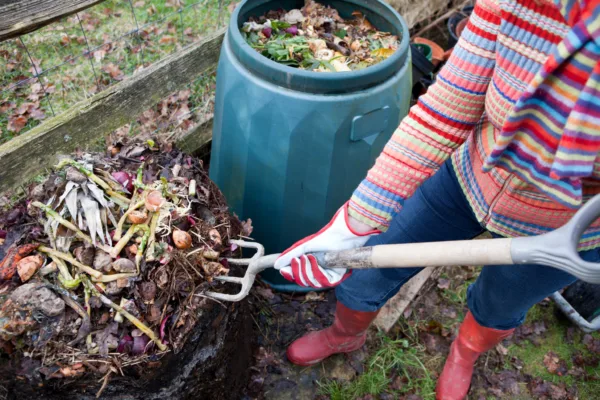
Generally, the presence of mice or wasps is an indicator that your compost pile is too dry. Remember, your compost pile should be about as damp as a rung out sponge. You also need to stir or turn the pile to ensure that the moisture is distributed throughout. If the pile is moist and aerated, it will build up the kind of heat that will make it an inhospitable environment for mice and wasps.
If wasps have however settled in for the long haul, you may have to explore other options. The first order of business should be to wet the pile down and leave it for a few days. To reduce the risk of getting stung, do this at night when the wasps are less active. If the wasps seem to not want to leave, you may have to wait until late fall when they die off. After that, you can dampen, stir, and monitor the pile more frequently.
Mice can present a different and sometimes more difficult problem. They won’t sting you, but they definitely can leave you squeamish. Keeping the pile working (that is, hot) is key. If they need air conditioning to keep their home cool, they will leave and find another place that is naturally cooler. The mice may also be burrowing under your bin, so look for any tunnels around the edges and flood them with water.
Please avoid the use of poisons as they can also be ingested by surrounding wildlife or harm your finished compost.
More Resources
More Blog Posts
More Events
Other Presentations/Workshops



Earth Keepers Youth Program (AB)
Born of the Sustainable Communities Team; our presentations and activities revolve around addressing waste diversion (finding better solutions for ‘garbage’ than landfills, like recycling and composting) holistically and in tandem with our other impacts on our environment. We offer classroom presentations as well as more in depth-learning exercises.
Earth Keepers Youth Program (AB)
Born of the Sustainable Communities Team; our presentations and activities revolve around addressing waste diversion (finding better solutions for ‘garbage’ than landfills, like recycling and composting) holistically and in tandem with our other impacts on our environment. We offer classroom presentations as well as more in depth-learning exercises.

FNWM: Consumer (Household) Batteries
Removing electronic waste from your landfill helps protect the environment and community health from dangerous materials contained in the e-waste.
FNWM: Consumer (Household) Batteries
Removing electronic waste from your landfill helps protect the environment and community health from dangerous materials contained in the e-waste.

FNWM: Electronic Waste
Consumer batteries are among the easiest materials to collect in yourcommunity for recycling. Call2Recycle will cover the cost of shipping consumer batteries from your community if you become a collection partner and follow their guidelines.
FNWM: Electronic Waste
Consumer batteries are among the easiest materials to collect in yourcommunity for recycling. Call2Recycle will cover the cost of shipping consumer batteries from your community if you become a collection partner and follow their guidelines.