Backhaul Program

The recent cold spell was a welcome sight for First Nation Communities in Northern Manitoba. While many of us here in Winnipeg may be looking forward to warmer weather, communities in the North rely on frigid temperatures to ensure the winter ice roads open each year. Winter ice roads are lifelines for Northern communities. Open for just a couple months each year, they allow First Nation communities to receive fuel, food supplies and building materials they need to last the whole year.
Winter ice roads aren’t just used to bring supplies into the community. They are also used to ship things out. Have you ever thought about what happens to waste in the North? Where does it go? The infrastructure we have to manage our waste here in Winnipeg often does not exist in Northern communities- and when it does, it comes at a great cost. In the past, many Northern communities opted to burn their waste. This was problematic because when waste isn’t sorted properly, hazardous materials can be placed in the waste site. When burned, these materials can release toxic chemicals into the air, soil and water- creating harmful and lasting health effects for the people and environment.
The Backhaul Program is a collaborative effort between First Nation communities, the First Nation Waste Minimization (FNWM) Team at the Green Action Centre, and many of the Producer Responsibility Organizations (PRO’s) in Manitoba. Producer Responsibility Organizations are product stewardship programs designed to ensure extended producer responsibility. So when a product reaches the end of its lifespan, these stewardship programs are responsible for collecting them and safely disposing of them. There are 11 PRO’s in Manitoba.
From January 18th to January 19th, members of the FNWM Team visited Bunibonibee Cree Nation and God’s Lake Narrows to provide support for their backhaul efforts. Bunibonibee has already filled three semi-trucks with waste collected from their community over the last year, with a fourth soon to be filled and sent down to the proper waste processing facilities in Winnipeg.


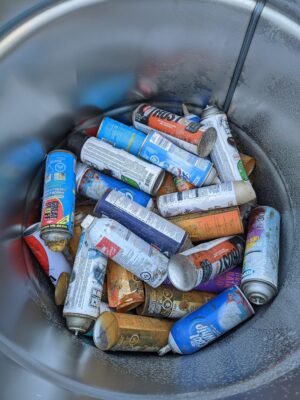

From January 24th to January 27th, members of the FNWM Team visited St. Theresa Point First Nation and Wasagamack First Nation to provide support in their backhaul efforts. Each of these communities have well established waste management programs that include programs for End-of-Life Vehicle crushing and decommissioning, sorting of tires, aerosols, lead acid batteries, e-waste, recyclables, washers, dryers and stoves (also known as white goods). During this visit, members of the FNWM Team helped develop a load plan and prepare pallets of waste to be shipped down the winter ice road in the coming weeks. It was a great opportunity to discuss the challenges of waste management in the North, and we appreciate each of these First Nations allowing us to spend time on their lands.
The success of the backhaul program is largely dependent on a long winter ice road season, but with climate change looming, there are concerns the winter ice roads won’t be viable in the future. We must continue to be mindful of our actions and work hard to build better relationships with our lands and waters to minimize the effects of climate change and to ensure Northern communities do not continue to feel the greatest impacts.
More Resources
More Blog Posts
More Events
Other Presentations/Workshops
Indigenous Zero Waste Technical Advisory Group (BC)
The Indigenous Zero Waste Technical Advisory Group (IZWTAG) offers training and resources to First Nations to implement zero waste systems within their communities.
Indigenous Zero Waste Technical Advisory Group (BC)
The Indigenous Zero Waste Technical Advisory Group (IZWTAG) offers training and resources to First Nations to implement zero waste systems within their communities.
FNWM: Composting
There is no registration required with an industry stewardship organization for composting. However, there are multiple good resources available to help you and your community choose the right method for composting.
FNWM: Composting
There is no registration required with an industry stewardship organization for composting. However, there are multiple good resources available to help you and your community choose the right method for composting.
Living Sustainably - Part 1
Intended for First Nation schools, this presentation provides a basic understanding for high school students about Traditional Ecological Knowledge, its role in protecting the environment, and how that knowledge is connected to Indigenous worldviews. This includes an overview of current waste practices in various First Nation communities around Manitoba and examples of how communities are making changes to live more sustainable ways of life to ensure there's a healthy planet for the next seven generations. Students will learn actions they can take to respect the environment.
Living Sustainably - Part 1
Intended for First Nation schools, this presentation provides a basic understanding for high school students about Traditional Ecological Knowledge, its role in protecting the environment, and how that knowledge is connected to Indigenous worldviews. This includes an overview of current waste practices in various First Nation communities around Manitoba and examples of how communities are making changes to live more sustainable ways of life to ensure there's a healthy planet for the next seven generations. Students will learn actions they can take to respect the environment.